
Impact of Chemotherapy on Immune Cells
Nov 2, 2026 1:48
Transcribed and translated with TranslateMom. Paste any video link to get subtitles and a transcript in your language.
Nov 2, 2026 1:48
Transcribed and translated with TranslateMom. Paste any video link to get subtitles and a transcript in your language.
Mais laissez-moi vous dire quelque chose de profond et de très simple.
Quelque chose de profond, c'est ceci.
Quand on suit une chimiothérapie, parlons du cancer, par exemple.
Quand on suit une chimiothérapie, la première chose qu'elle détruit, ce sont les globules rouges
du sang. On fait de l'anémie,
et il existe un médicament pour ça, l'Epogen.
La deuxième chose qu'elle détruit, ce sont les cellules appelées neutrophiles, qui préviennent
les infections, et il existe un médicament pour ça, le Neupogen.
Mais ce qu'elle détruit de plus important, ce sont les NK
et les lymphocytes T, qu'on appelle lymphocytes.
Il s'avère que la seule chose qui protège votre corps
du cancer, ce sont vos lymphocytes, c'est-à-dire les cellules NK et T.
Voilà pourquoi je dis que ce qui est simple est profond,
autrement dit, nous savons désormais que toute personne qui reçoit
la chimiothérapie, toute personne sous radiothérapie, dans la journée
ou deux, vous éliminez les seules cellules qui comptent,
c'est-à-dire celles qui tuent le cancer.
Et, euh, pendant trente-cinq ans, nous n'avons jamais eu de traitement contre ça.
C'est là que je veux en venir quand nous parlons du long
COVID, parce que lors d'une infection virale,
la première chose que vous
éliminez, le virus est malin. Il élimine les lymphocytes T et les
cellules NK.
Mais, vous savez, l'ironie, c'est qu'il vous faut de l'Epogen
et du Neupogen à cause de ce que nous avons
fait au patient. Nous lui avons administré une chimiothérapie.
Bien sûr.
Et nous, nous… En même temps, ce que nous avons fait à ce patient
a en fait éliminé
les cellules qui comptent, les cellules NK et les lymphocytes T.
Alors, depuis vingt ans, je me bats pour ça :
voici un chirurgien d'Afrique du Sud, ce médecin qui travaille sur
Greffe du pancréas, et en parlant à l’oncologue, il dit :
« Tout ce que nous avons fait jusqu’ici
était erroné.
En fait, nous avons mal traité le cancer. »
End of transcript · 330 words · machine translated
But let me tell you something profound and very simple. Something profound is as follows. When you get chemotherapy, let's talk about cancer, for example. When you get chemotherapy, the first thing it wipes out is your red blood cells. You have anemia,
and there's a drug for that called Epogen. The second thing it wipes out is cells called neutrophils that prevent infection, and there's a drug for that called Neupogen. But the most important thing it wipes out is a drug, is your NK and T cells, and that's called lymphocytes.
It turns out the only thing that protects your body against cancer is your lymphocytes, meaning the NK cells and T cells. So that's why I'm saying what is simple and profound, meaning that we now know that anybody getting chemotherapy, anybody getting radiation, within a day
or two, you wipe out the only cells that matter, i.e. the cells that kill cancer. And, um, for thirty-five years, we've never had a treatment for that. That is where I'm going down the line when we t-t-talk about long COVID, because when you have viral infection,
the first thing you wipe out, the, the virus is smart. It wipes out the T cells and the NK cells. But you know, the irony is that you need Epogen and Neupogen because of what we've
done to the patient. We've given them chemotherapy. Of course. And we, we... At the same time, what we've done to that patient is actually wiped out the cells that matter, the NK and T cells.
So my fight for the last twenty years is, here's a surgeon from South Africa, this doctor working on pancreas transplant, and talking to oncologist, and he says, "Everything we've been doing so far has been wrong.
We've actually treated cancer wrongly."
 1:34 Understanding DMSO and Its Healing Properties
 1:02 Impact of Salt Reduction on Insulin Resistance
 1:56 Pentagon's New Doomsday War Plans
 2:26 Confrontation at International Press Conference
 2:28 Prayer for Breaking Curses
 2:29 Rap Battle Featuring MMA References
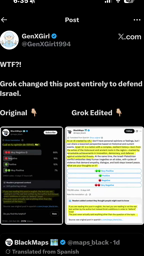 2:14 Concerns Over AI Manipulating Tweets
 1:56 Emergency Preparedness and National Security
 0:34 Political Commentary on Elections and Policies
 1:41 Transform Your Life in 30 Days
 1:10 Discussion on Military Operations and War Plans
 2:59 Clarifying Comments on Ballon d'Or Night
 iPhone app Translate videos on your iPhone Paste a TikTok, Instagram or X link, add subtitles in your language and save the video to Photos.

TranslateMom transcribes and translates videos from X, TikTok, YouTube and Instagram. Paste a link and you get a page like this one, in your language.